
Septoplasty recovery usually includes about a week of downtime, but the inside of the nose continues to heal for several months. Expect congestion, pressure, mild drainage, and temporary blockage before breathing improves. Follow your surgeon’s instructions and keep follow-up visits so your ENT can check your healing.
Why does recovery feel confusing at first?
If you’ve been waiting to breathe better, the first few days after surgery feel confusing. Your nose may feel blocked, your sleep may feel different, and you may wonder whether the procedure worked. Early stuffiness is common, especially while swelling, drainage, crusting, or splints are present.
This guide explains what to expect after a deviated septum operation, how healing often progresses, and when to call your ENT team.
What recovery usually feels like
Septoplasty is surgery to straighten the septum, the wall inside the nose that separates the two nostrils. When the septum is crooked or shifted, it narrows the nasal airway, making breathing harder. A deviated septum treatment plan may include medications for inflammation or allergies, but surgery is the option that physically changes the septum’s position.
After surgery, most patients feel stuffy and tired. Pressure, mild bleeding, bloody drainage, crusting, tenderness, and dry mouth also happen early on.
Many people are relieved to learn that recovery often feels more congested than intensely painful. Many patients feel congested during the first stage of healing. Breathing usually improves gradually as swelling decreases.
Why your nose may feel blocked after surgery
Breathing feels worse before it feels better. That’s one of the most important things to know about septoplasty recovery.
The surgery improves airflow, but the inside of the nose still needs time to heal. Swelling narrows the airway temporarily. Dried blood, crusting, and drainage make the nose feel blocked. Internal splints also take up space and limit airflow until your ENT removes them.
This early blockage is discouraging, especially if you chose a deviated septum treatment because congestion was affecting sleep, exercise, or daily comfort. In many cases, that stuffy feeling improves as swelling settles.
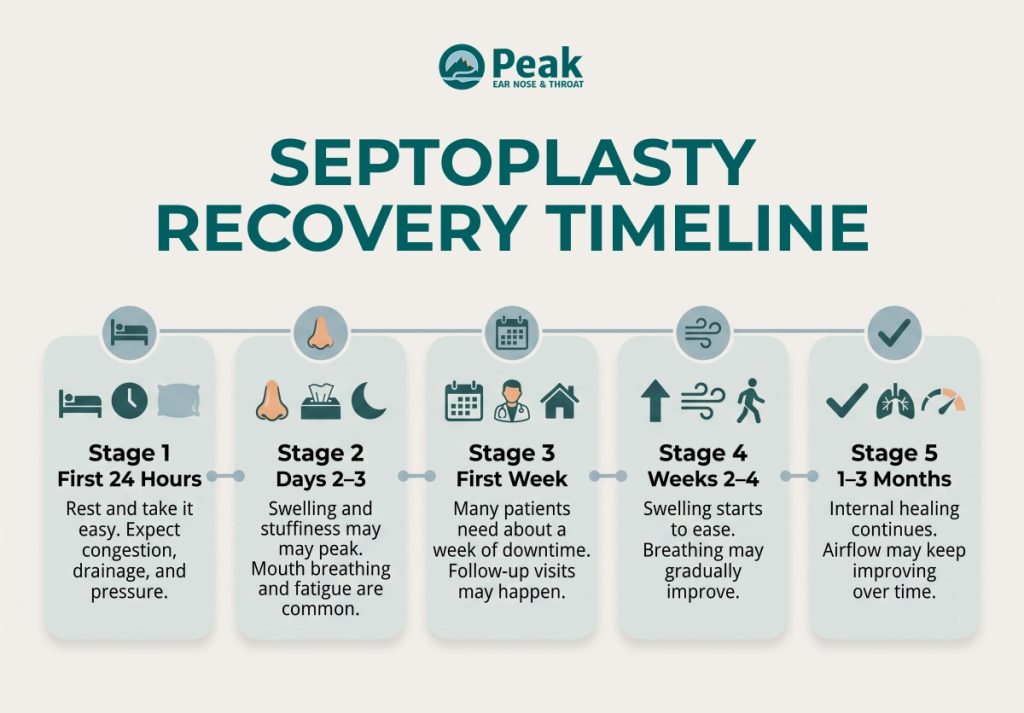
Septoplasty recovery timeline: First week to full healing
A timeline helps you plan, but it shouldn’t replace your surgeon’s instructions. Your anatomy, overall health, and any combined procedures can affect your recovery timeline after a deviated septum operation.
First 24 hours
You’ll likely feel groggy as anesthesia wears off. You’ll need someone to drive you home and stay available while you rest. Expect congestion, drainage, mild bleeding, and pressure. Plan for rest, fluids, and a slower pace. Sleep with your head elevated if your surgeon recommends it.
Days two to three
The second and third days feel stuffier than expected. Swelling may increase before it starts to ease. Mouth breathing can cause a dry mouth or a sore throat. Short walks may be fine if approved, but this isn’t the time for workouts, heavy chores, or errands.
First week
Many patients need about a week of downtime after septoplasty. Some return to light work or school sooner, while others need more time, especially if their job is physically demanding.
Follow-up often happens during this period. Your ENT may remove splints during a follow-up visit. Some patients notice better airflow after their ENT removes the splints, although swelling may still come and go.
Weeks two to four
Congestion often begins to improve during this phase. You may feel more like yourself, sleep better, and return to more normal routines once your ENT clears you. Your ENT may still limit exercise, lifting, bending, and nose-blowing during part of this stage.
One to three months and beyond
Internal healing continues after daily life feels more normal. Swelling inside the nose continues to improve for several months. A deviated septum treatment plan should include realistic expectations because allergies, chronic sinus inflammation, enlarged turbinates, or other concerns may also affect breathing.
What you can and can’t do after septoplasty
Your aftercare instructions are there to protect healing and reduce the risk of bleeding. Follow your surgeon’s plan, even if you start feeling better sooner than expected.
Your ENT may ask you to avoid the following:
- Blowing your nose too soon
- Strenuous exercise
- Heavy lifting or bending forward
- Picking at crusting or dried blood
- Forcefully cleaning inside the nose
- Restarting certain medications without approval
- Skipping follow-up visits
Your ENT may ask you to rest, sleep with your head elevated, use saline as directed, drink fluids, keep your mouth open when sneezing, take medications as prescribed, and call with concerns.
Good aftercare makes recovery more comfortable and helps your ENT guide your return to regular activity.
What’s usually expected after septoplasty
Normal healing doesn’t always feel smooth. Some days may feel more congested than others, especially early on.
Common post-surgery symptoms may include stuffy breathing, mild bleeding or bloody drainage, pressure, tenderness, crusting, dry mouth, temporary changes in smell, mild headache, fatigue, and trouble sleeping during the first few nights.
These symptoms are part of septoplasty recovery, but they should generally become easier as healing progresses. Your ENT’s instructions should guide cleaning, saline use, and follow-up.
When to call your ENT after septoplasty
It’s better to ask than sit with uncertainty. Call your ENT team if symptoms are concerning or seem to be worsening rather than improving.
Possible reasons to call include heavy bleeding, fever, worsening pain, increasing swelling, severe headache, vision changes, shortness of breath, unusual drainage, or splints or packing that shift.
A careful follow-up helps show whether symptoms are part of normal healing or need more attention.
What to know about splints, packing, and follow-up visits
Not every patient has nasal packing after a deviated septum operation. Some patients have internal splints instead, and some may have dissolvable stitches. Your surgeon will explain what’s inside your nose and when they’ll check or remove it.
Splints make the nose feel blocked while they’re in place. That’s frustrating, but they may help support the septum as it heals. Splint removal may cause pressure or brief discomfort, but many patients feel relief once the visit is over.
Don’t try to move, trim, or remove anything inside the nose on your own. Follow-up visits let your ENT check healing, remove splints if needed, clear crusting when appropriate, and answer questions.
Why recovery may differ if another procedure was done
Some patients have septoplasty alone. Others have septoplasty with turbinate reduction, sinus surgery, nasal valve repair, or another procedure. That changes how recovery feels.
A combined treatment can lead to more swelling, different rinse instructions, longer activity limits, or additional follow-up visits after your deviated septum operation. A friend’s recovery may not match yours.
This is why a personalized plan for deviated septum treatment is important. Your ENT explains the procedure, why they recommended it, and how your recovery instructions support your healing.
FAQ
How long does septoplasty recovery take?
Many patients need about a week of downtime, but full internal healing continues for several months. Your timeline may vary if surgery was combined with another nasal or sinus procedure.
Is it normal to feel congested after septoplasty?
Yes. Congestion is common early in recovery. Swelling, crusting, drainage, dried blood, and splints make the nose feel blocked. If congestion worsens or feels concerning, call your ENT team.
What to expect after deviated septum surgery?
After deviated septum surgery, expect congestion, pressure, mild drainage, fatigue, and temporary mouth breathing. Your nose may feel blocked at first, but breathing usually improves as swelling goes down.
What not to do after septoplasty?
After septoplasty, don’t blow your nose too soon, lift heavy objects, exercise strenuously, bend forward repeatedly, or forcefully clean inside your nose unless your surgeon clears you.
What is the hardest day after septoplasty?
The hardest days are often days two and three, when swelling, congestion, pressure, and mouth breathing are most noticeable. Call your ENT if symptoms worsen or feel concerning.
Can fixing a deviated septum change my life?
Fixing a deviated septum makes daily life more comfortable for some patients by improving nasal airflow, sleep, exercise tolerance, and overall breathing comfort. Results vary, especially if allergies, sinus inflammation, or other nasal issues are also involved. A careful ENT evaluation helps set realistic expectations.

Feel more confident about recovery with Peak ENT
Septoplasty recovery takes patience, especially when your nose feels blocked before breathing improves. The first week often brings congestion, pressure, drainage, and activity limitations, but those symptoms usually ease as healing continues.
If you’re considering a deviated septum operation or have questions after surgery, Peak ENT can help you understand what to expect and whether treatment may be right for you. Contact Peak ENT today to schedule an appointment and get clearer answers about your recovery plan, options, and next steps toward more comfortable breathing.