
Sleep apnea CPAP alternatives may include Inspire therapy, oral appliances, positional therapy, nasal treatment, airway surgery, and supportive lifestyle changes. The right option depends on the type and severity of sleep apnea, CPAP tolerance, airway anatomy, and sleep study results. An ENT evaluation helps determine which sleep apnea therapy may fit your needs.
When CPAP doesn’t fit your sleep
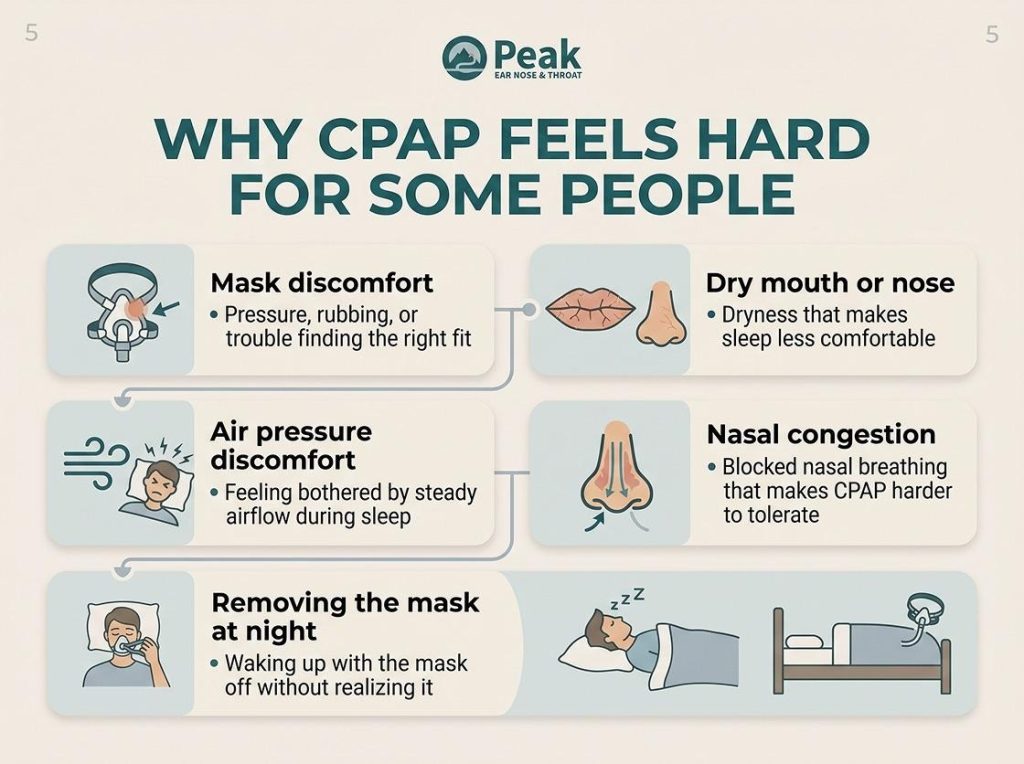
CPAP works well for many people with sleep apnea. For others, it’s hard to sleep with a mask, hose, or steady air pressure every night. Dryness, discomfort, noise, or nasal congestion may get in the way, and some people wake up to find they’ve taken the mask off without realizing it.
When CPAP keeps disrupting sleep, it’s worth looking at what’s making treatment difficult. Some patients may need a different setup. Others may be candidates for an oral appliance, Inspire therapy, nasal treatment, an airway procedure, or another sleep apnea treatment device. The next step is to find out why CPAP isn’t working and where the airway may be narrowing during sleep.
What are sleep apnea CPAP alternatives?
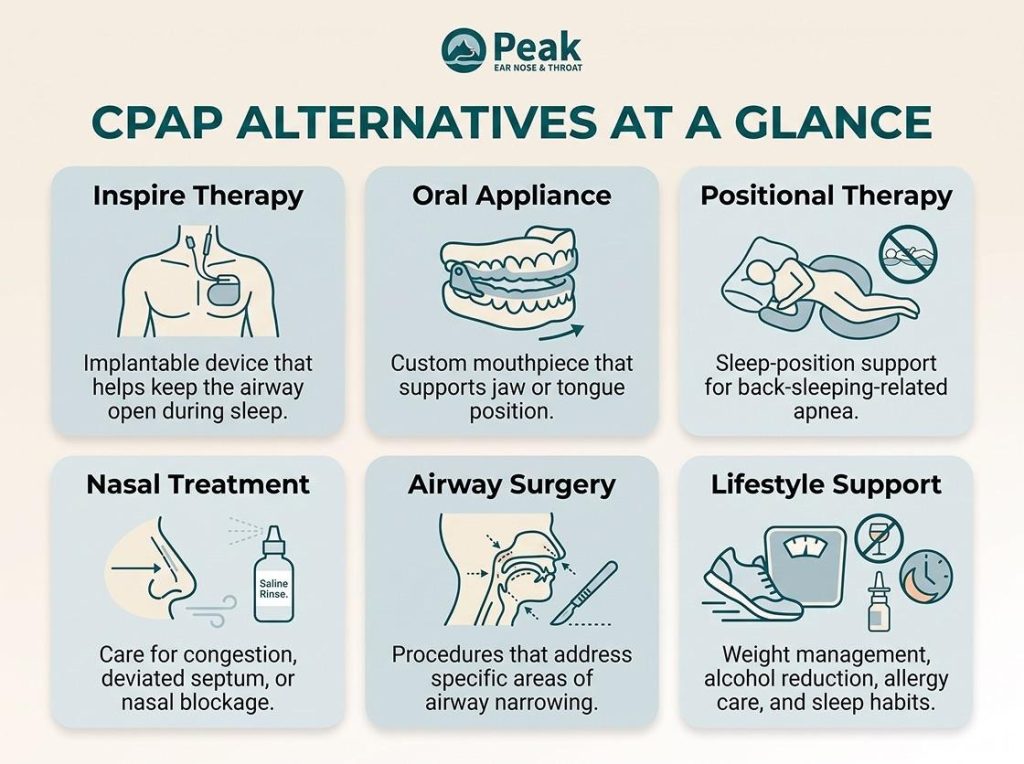
Sleep apnea CPAP alternatives may help people with obstructive sleep apnea when they can’t tolerate CPAP, don’t use it consistently, or need a treatment that better fits their sleep and airway needs. These options may include oral appliance therapy, Inspire therapy, positional therapy, nasal treatment, airway surgery, jaw surgery, and lifestyle support.
Doctors often use these alternatives for obstructive sleep apnea. This type of sleep apnea happens when the airway repeatedly narrows or closes during sleep. When breathing pauses occur repeatedly, oxygen levels may drop, sleep may become fragmented, and daytime energy may suffer.
Central sleep apnea is different. It happens when the brain doesn’t send steady breathing signals during sleep. Because the cause is different, the treatment plan may differ. That’s one reason patients shouldn’t choose a CPAP alternative solely for convenience.
The best therapy for sleep apnea depends on the sleep study, symptoms, anatomy, and comfort needs. Some patients still do best with CPAP after adjustments to the mask or pressure. Others may need a different approach that fits their airway and their ability to sleep comfortably.
How to know which CPAP alternative may fit
Choosing a CPAP alternative starts with a clear look at the problem. A sleep study helps show how often breathing pauses happen, how severe the sleep apnea is, how oxygen levels change, and whether body position affects breathing.
The next step is understanding why CPAP isn’t working. Some patients have trouble with mask fit. Others feel claustrophobic, wake up from air pressure, develop dry mouth, or have nasal blockage that makes breathing through the nose harder.
An ENT evaluation adds important information. An ENT looks at the nose, tonsils, soft palate, tongue base, throat, and airway structure. This helps show whether nasal obstruction, enlarged tonsils, tissue collapse, or tongue position may contribute to the problem.
Doctors may also consider:
- Whether sleep apnea is mild, moderate, or severe
- Whether symptoms continue despite treatment
- Whether apnea is worse when sleeping on the back
- Whether nasal congestion affects sleep
- Whether the patient has tried CPAP long enough to know what is and isn’t working
- Whether insurance requires certain documentation before approving another treatment
A good treatment plan should improve breathing and fit real sleep habits. The most effective option is the one that helps the patient breathe better and is used consistently.
Common examples of CPAP alternatives
Several CPAP alternatives may help patients with obstructive sleep apnea. The right option depends on the person’s sleep study, airway anatomy, health history, and treatment goals.
Inspire therapy
Inspire therapy is an implantable option for certain people with obstructive sleep apnea who struggle with CPAP. It doesn’t use a mask, hose, or bedside air-pressure machine.
Inspire is a sleep apnea treatment device that works inside the body. It gently stimulates the nerve that helps control tongue movement during sleep. This helps move the tongue and nearby airway muscles forward, keeping the airway more open while the person breathes.
Patients turn the device on before bed and off in the morning. After implantation and healing, the settings are adjusted to support breathing while still feeling comfortable enough for sleep.
Inspire isn’t right for every patient. It’s generally considered for people with obstructive sleep apnea who have tried CPAP and haven’t been able to use it successfully. Sleep study results and airway anatomy help determine candidacy.
Oral appliance therapy
Oral appliance therapy uses a custom mouthpiece worn during sleep. The appliance usually moves the lower jaw or tongue forward to help create more space in the airway.
This option often works best for mild to moderate obstructive sleep apnea. Some people like that oral appliances are small, quiet, and easier to travel with than a CPAP machine.
A custom oral appliance needs professional fitting and follow-up. Some patients may notice jaw soreness, tooth discomfort, dry mouth, or changes in bite, so monitoring is important.
Positional therapy
Some people have more breathing pauses when they sleep on their backs. Positional therapy helps train or support side sleeping.
This may involve pillows, wearable trainers, or sleep-position habits. It works best when a sleep study shows that sleep apnea is clearly worse on the back. It’s usually less helpful when apnea happens in several positions or is more severe.
Nasal and sinus treatment
Nasal blockage makes sleep feel restless and makes CPAP harder to use. Common causes include allergies, chronic congestion, a deviated septum, enlarged turbinates, nasal polyps, or sinus inflammation.
Nasal treatment may include medication, allergy care, saline rinses, nasal sprays, turbinate reduction, septoplasty, or sinus treatment. These options may improve airflow and nighttime comfort.
Nasal treatment usually doesn’t replace full treatment for obstructive sleep apnea on its own. Still, better nasal breathing may support sleep quality and make other treatments easier to use.
Tonsil, throat, and airway surgery
Surgery may help when a specific part of the airway contributes to obstruction. Enlarged tonsils or adenoids block airflow, especially in children, though adults may also have tonsil-related obstruction.
Some adults may need procedures that address the soft palate, throat, tongue base, or jaw structure. Surgical success depends on where the airway narrows and whether collapse happens in more than one area.
Surgery shouldn’t be treated as the default choice for anyone who dislikes CPAP. It works best when the evaluation shows a clear anatomic reason; it may also help as a CPAP alternative.
Lifestyle and medical support
Lifestyle and medical support may reduce the severity of sleep apnea in some patients. Weight management may help when weight contributes to airway narrowing. Reducing alcohol near bedtime may also help because alcohol relaxes airway muscles during sleep.
Allergy care, reflux treatment, medication review, and better sleep habits may also support therapy for sleep apnea. These steps often work best as part of a broader plan rather than as a full replacement for treatment in cases of moderate or severe sleep apnea.
Benefits of finding the right sleep apnea treatment
The right sleep apnea treatment can help you breathe more steadily at night and feel clearer during the day. When breathing pauses keep interrupting sleep, patients may wake up tired, notice morning headaches, or feel like they never get deep rest. A treatment that fits your airway, comfort, and sleep habits can make it easier to stay consistent.
The right option may help patients:
- Breathe more steadily during sleep
- Wake up less often
- Reduce loud snoring
- Feel more rested during the day
- Improve morning headaches or dry mouth
- Sleep more comfortably
- Feel more confident about their treatment plan
For some people, CPAP remains the best option. For others, CPAP alternatives for sleep apnea may offer a more realistic path because the treatment better fits their comfort needs.
This is especially important for patients who technically have CPAP but don’t use it long enough each night. A treatment that looks effective on paper won’t help much if it stays on the nightstand. That’s why comfort, airway anatomy, and real-world use all need to shape the decision.
Mistakes to avoid when comparing CPAP alternatives
When you’re comparing CPAP alternatives, it helps to know what led you astray. A few common mistakes include:
- Assuming all CPAP alternatives work the same way: Inspire, oral appliances, positional therapy, nasal treatment, and surgery all address different parts of the problem.
- Choosing an option only because it sounds easier: A mouthpiece or mask-free treatment may sound more comfortable, but it still needs to fit your sleep apnea severity, anatomy, and long-term needs.
- Overlooking nasal breathing: Congestion, allergies, a deviated septum, or enlarged turbinates may make CPAP use more difficult. Treating nasal issues may improve comfort, even if you still need another sleep apnea treatment.
- Skipping the sleep study details: Sleep apnea severity, oxygen levels, and sleep-position patterns all help determine which options may be a good fit.
- Assuming Inspire works for everyone: Inspire may help certain people with obstructive sleep apnea who struggle with CPAP, but patients still need to qualify.
- Stopping CPAP without talking to a provider: Untreated sleep apnea continues to affect sleep, oxygen levels, and daytime function. If CPAP isn’t working, the safer next step is to review the problem and compare options with a specialist.
What sleep studies and airway exams show
A sleep study and airway exam give your provider a clearer picture of what’s happening during sleep. Together, they may show:
- How often breathing pauses happen: A sleep study measures how many times breathing slows or stops during sleep.
- How long pauses last: Longer or more frequent pauses may point to more serious sleep disruption.
- How oxygen levels change: Drops in oxygen indicate how sleep apnea affects the body overnight.
- Whether sleep position plays a role: Some people experience worse apnea when sleeping on their back. Others have breathing pauses in several positions.
- How severe the sleep apnea is: Mild, moderate, and severe sleep apnea may lead to different treatment recommendations.
- Where the airway may be narrowing: An ENT evaluates the nose, throat, tonsils, soft palate, tongue base, and airway structure.
- Whether nasal blockage contributes: Congestion, a deviated septum, enlarged turbinates, or sinus issues may make nighttime breathing or CPAP use harder.
- Whether a sleep apnea treatment device may fit: Inspire therapy works best with the right type of sleep apnea and the right airway pattern. Oral appliances also depend on jaw position and dental factors.
- Whether surgery may be appropriate: If obstruction occurs in a specific area, an airway exam helps determine which procedure makes sense.
Together, a sleep study and airway evaluation help patients move from guessing to a clearer plan.
Tools and treatment options that may help
Patients may encounter many tools and treatments when researching CPAP alternatives for sleep apnea. These options can include devices, procedures, and supportive treatment changes.
Common tools and options include:
CPAP adjustments: A different mask, a different humidity setting, the ramp feature, or a pressure adjustment may help some patients continue CPAP more comfortably.
BiPAP or APAP: Some patients do better with one type of positive airway pressure machine than the other. These are still PAP treatments, but they may feel different than standard CPAP.
Oral appliance: A custom mouthpiece may help hold the jaw or tongue forward during sleep.
Inspire therapy: This implantable sleep apnea treatment device gently stimulates airway muscles during sleep to help keep the airway open.
Positional devices: Pillows or wearable trainers may help patients stay off their back when apnea is position-dependent.
Nasal treatment: Allergy treatment, septoplasty, turbinate reduction, or sinus care may improve airflow and comfort.
Airway surgery: Selected patients may benefit from procedures that address the tonsils, soft palate, tongue base, jaw structure, or other sites of obstruction.
The best tool depends on the person. A device or procedure should match the sleep study, airway anatomy, and the patient’s ability to use it long term.
FAQ
What are the best CPAP alternatives for sleep apnea?
The best option depends on the severity of the person’s sleep apnea, airway anatomy, CPAP tolerance, and sleep study results. Sleep apnea CPAP alternatives may include Inspire therapy, oral appliance therapy, positional therapy, nasal treatment, airway surgery, and supportive lifestyle changes.
Is Inspire therapy a CPAP alternative?
Yes. Inspire is an implantable CPAP alternative for certain people with obstructive sleep apnea who struggle with CPAP. This sleep apnea treatment device gently stimulates the nerve that helps move the tongue, keeping the airway more open during sleep.
Who qualifies for Inspire sleep apnea therapy?
Patients may qualify if they have obstructive sleep apnea, have tried CPAP without success, meet sleep study criteria, and have airway anatomy that fits therapy for sleep apnea. A provider evaluation is needed to confirm candidacy.
What should I do if I can’t tolerate CPAP?
Talk with a sleep specialist or ENT before stopping treatment. Sometimes mask changes, pressure adjustments, humidity changes, or nasal treatment help. If CPAP still doesn’t work, an evaluation can help identify another option.
Is a mouthpiece effective for sleep apnea?
A custom oral appliance may help mild to moderate obstructive sleep apnea by moving the jaw or tongue forward during sleep. It needs professional fitting and follow-up to confirm it’s helping and not causing jaw, tooth, or bite problems.
Can nasal surgery cure sleep apnea?
Nasal surgery may improve airflow and make breathing through the nose easier, but it usually doesn’t cure obstructive sleep apnea by itself. Since sleep apnea often involves the throat, soft palate, or tongue base, the full airway needs evaluation.
Are CPAP alternatives as effective as CPAP?
CPAP is often one of the most effective nonsurgical treatments when it’s used consistently. Alternatives may work well for the right patient, especially when CPAP isn’t used enough to be effective. Effectiveness depends on anatomy, severity, comfort, and long-term use.
Do I need a sleep study before choosing a CPAP alternative?
Usually, yes. A sleep study shows the type and severity of sleep apnea, oxygen changes, and sleep-position patterns. These details help guide treatment and indicate whether a specific sleep apnea treatment device or another option may be a better fit.
Can an ENT help with sleep apnea?
Yes. An ENT evaluates the nose, throat, tonsils, soft palate, tongue base, and airway structure. This helps determine whether nasal treatment, Inspire therapy, airway surgery, or another option may be appropriate.
Is sleep apnea treatment possible without a mask?
Yes, for some patients. Mask-free options may include Inspire therapy, oral appliance therapy, positional therapy, or surgery. The right option depends on the sleep study results, airway anatomy, and the reason CPAP isn’t working.
Find the right CPAP alternative with Peak ENT
CPAP helps many patients, but it isn’t the only path for every person with obstructive sleep apnea. If the mask, pressure, dryness, or equipment keeps you from sleeping comfortably, it may be time to get clearer answers.
Peak ENT evaluates your nasal breathing, airway anatomy, sleep study results, and CPAP history. From there, the team helps you understand whether Inspire therapy, an oral appliance, nasal treatment, surgery, or another therapy for sleep apnea may fit your needs.
You don’t have to sort through treatment options on your own. Contact Peak ENT to schedule an evaluation and learn which CPAP alternative may help you breathe easier, sleep better, and feel more confident about your next step.