
Deviated septum symptoms often include chronic nasal congestion, breathing worse through one side, facial pressure, frequent sinus infections, nosebleeds, and snoring. Common causes of a deviated septum include natural anatomy, genetics, and nasal injuries. An evaluation confirms the diagnosis and guides the best treatment for a deviated septum, which may consist of medical therapy for inflammation or a procedure such as septoplasty when obstruction is significant.
When congestion won’t go away, your nasal structure may be the reason
If you feel like you never breathe clearly through your nose, it’s easy to assume allergies are to blame. Many people live with year-round congestion, mouth breathing, or pressure that never entirely goes away. In some cases, the problem is structural, not seasonal. The narrowed nasal passages disrupt sleep and make sinus issues harder to manage.
In this guide, we’ll break down the most common symptoms, explain the leading causes, and walk through deviated septum treatment options so you know when to try simple home care and when it’s time to get evaluated.
What a deviated septum is and why it matters
The nasal septum separates the left and right sides of your nose. When it shifts off-center, it narrows one passage, limiting airflow and drainage. That’s why symptoms often include one-sided congestion, nighttime breathing trouble, snoring, recurrent sinus issues, and occasional nosebleeds. When airflow remains restricted, irritation and inflammation linger, making congestion feel constant.
How doctors evaluate deviated septum symptoms
A proper evaluation helps determine whether your symptoms are primarily structural, inflammatory, or a combination of both. Many people have allergies, chronic sinus inflammation, or enlarged turbinates along with a septal deviation, so the goal is to identify what’s driving their day-to-day symptoms.
1. Symptom history
Your clinician will ask about breathing patterns, whether one side feels consistently blocked, and how long symptoms have lasted. They’ll also ask about snoring, mouth breathing, headaches or facial pressure, nosebleeds, and the frequency of sinus infections. This step often clarifies how symptoms affect sleep and quality of life.
2. Physical exam
A focused nasal exam evaluates the septum position, swelling, and signs of irritation. The clinician will also assess airflow and look for inflammation that may indicate allergies or chronic nasal irritation.
3. In-office tools, when appropriate
Some evaluations include nasal endoscopy to see deeper into the nasal passages. This helps identify structural narrowing, inflammation, or drainage concerns.
4. Imaging, when needed
If recurrent sinus infections or chronic sinus symptoms are part of the picture, imaging may help show sinus anatomy and whether blockage contributes to ongoing problems.
5. Diagnosis and plan
Once the clinician confirms likely deviated septum causes and contributing factors, they’ll recommend a plan that may include medical management, supportive care, or a procedural approach.
6. Follow-up
Follow-up helps confirm whether the plan is improving breathing and sleepand whether you need adjustments.
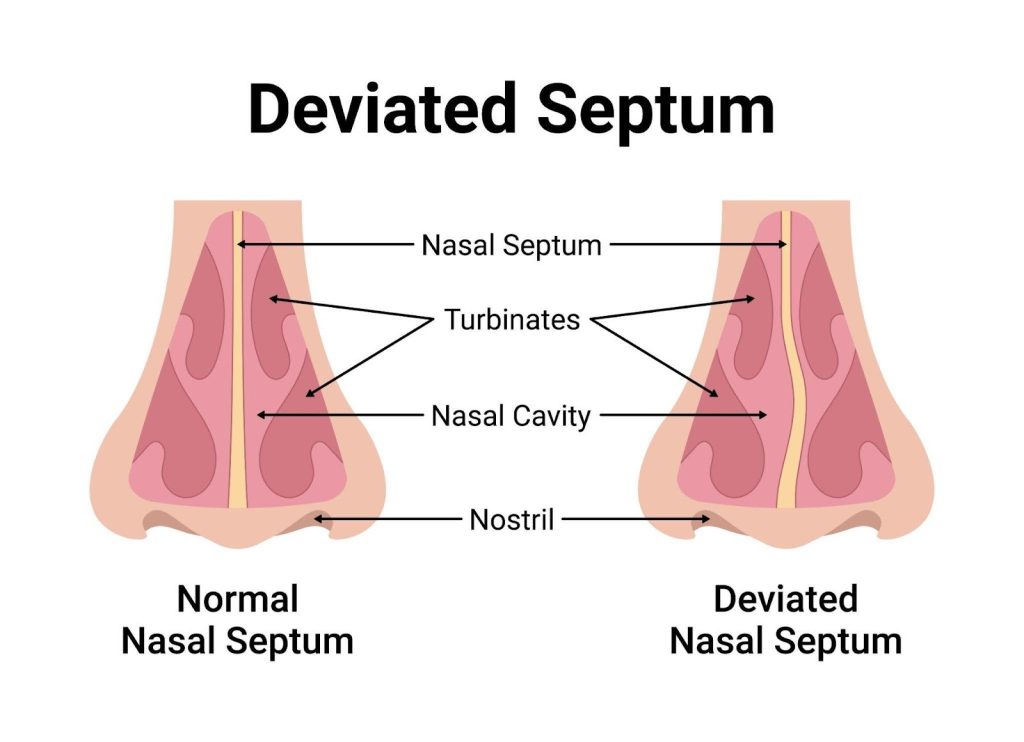
How a deviated septum may be affecting your breathing
Year-round congestion that never fully clears
Some people try multiple allergy medications and still feel blocked on one side. When symptoms persist, an exam may reveal that structural narrowing is a major contributor to ongoing congestion. In these cases, symptoms feel constant rather than seasonal.
Breathing changes after a nasal injury
A sports injury, fall, or accident shifts nasal anatomy and creates a new obstruction. This is one of the most common causes of a deviated septum, and many patients notice new snoring, increased mouth breathing, or a “blocked” feeling that wasn’t present before.
Recurrent sinus infections and facial pressure
If sinus infections happen frequently or linger longer than expected, drainage may be affected. Many patients experience pressure, thick drainage, and ongoing congestion that improves only temporarily.
Benefits of treatment
Treating the underlying issue improves daily comfort and long-term health. The biggest benefit is often simple: breathing better through your nose.
- Easier nasal breathing and less mouth breathing: Restored airflow reduces dryness in the mouth and throat.
- Better sleep for some patients: Improved airflow reduces nighttime obstruction and snoring.
- Fewer sinus flare-ups for some patients: When drainage improves, infections may become less frequent or severe.
- Better response to allergy care: If nasal anatomy allows better airflow, medications and rinses may work more effectively.
The appropriate treatment depends on test results and symptom severity.
Common mistakes to avoid
Many people live with symptoms for years without realizing a structural issue may be part of the problem.
- Assuming it’s “allergies” year-round: If congestion is persistent or mostly one-sided, get evaluated.
- Overusing decongestant sprays: Overuse leads to rebound congestion, worsening symptoms.
- Ignoring sleep issues: Snoring and poor sleep may indicate airway obstruction worth addressin.
- Skipping treatment for contributing inflammation: Allergies and irritation worsen obstruction even when anatomy plays a role.
- Expecting medication alone to fix a major structural blockage: Medication reduces swelling, but it cannot move cartilage or bone.
Data and research insights
Research and clinical guidance point to a few helpful takeaways:
- Cleveland Clinic notes that these issues are common and that many people have some degree of septal deviation, though not everyone has symptoms.
- Mayo Clinic highlights that symptoms include nasal blockage, nosebleeds, and noisy breathing during sleep, and that an injury shifts the septum position.
- AAO-HNS patient information explains that septoplasty is a treatment option for a deviated septum that causes nasal obstruction and breathing difficulties.
Treatment options that help you breathe easier
Treatment often starts with simple steps, then moves to more targeted care if symptoms continue.
- Saline rinses clear mucus and irritants, and nasal steroid sprays reduce swelling over time.
- Allergy management may help when inflammation worsens or when there is blockage or congestion.
- Humidifiers and nasal strips provide temporary nighttime relief for some people.
- If symptoms persist due to structural narrowing, doctors may recommend septoplasty, sometimes with turbinate reduction, to improve airflow.
The right plan depends on your anatomy, symptom severity, and how much congestion affects sleep, exercise, and daily comfort.
FAQ
What are the most common deviated septum symptoms?
Common symptoms include chronic nasal congestion, difficulty breathing through one nostril, frequent sinus infections, facial pressure, nosebleeds, and snoring. Symptoms often worsen during cold or allergy seasons and may not fully improve with over-the-counter medications.
What are the most common deviated septum causes?
The most common causes include natural anatomy, genetics, and nasal injuries from sports, falls, or accidents. Some people are born with a deviation, while others develop one later after trauma that shifts the cartilage or bone.
Can it get worse over time?
It may not change dramatically on its own, but symptoms worsen over time if inflammation increases, allergies worsen, or nasal tissues swell. Additional injuries also worsen obstruction and make breathing more difficult.
When does deviated septum treatment require surgery?
Doctors may recommend surgery when symptoms do not improve with medical care and the obstruction affects daily life, sleep, or recurring infections. Septoplasty is a common deviated septum treatment that improves airflow by correcting the septum’s position.
Does septoplasty change the outside appearance of the nose?
Septoplasty focuses on internal structure and aims to improve airflow, not change appearance. In most cases, it does not alter how the nose looks. Surgeons typically discuss cosmetic changes separately during rhinoplasty planning.

Start breathing easier with Peak ENT
Living with chronic congestion can really affect sleep, energy, and daily comfort. If you recognize ongoing symptoms, especially one-sided blockage or recurring sinus issues, an evaluation can confirm the cause and point you to the best next step.
Peak ENT reviews deviated septum causes and recommends a personalized treatment plan, from medical management to procedural options. Contact Peak ENT to schedule an evaluation and start breathing easier.